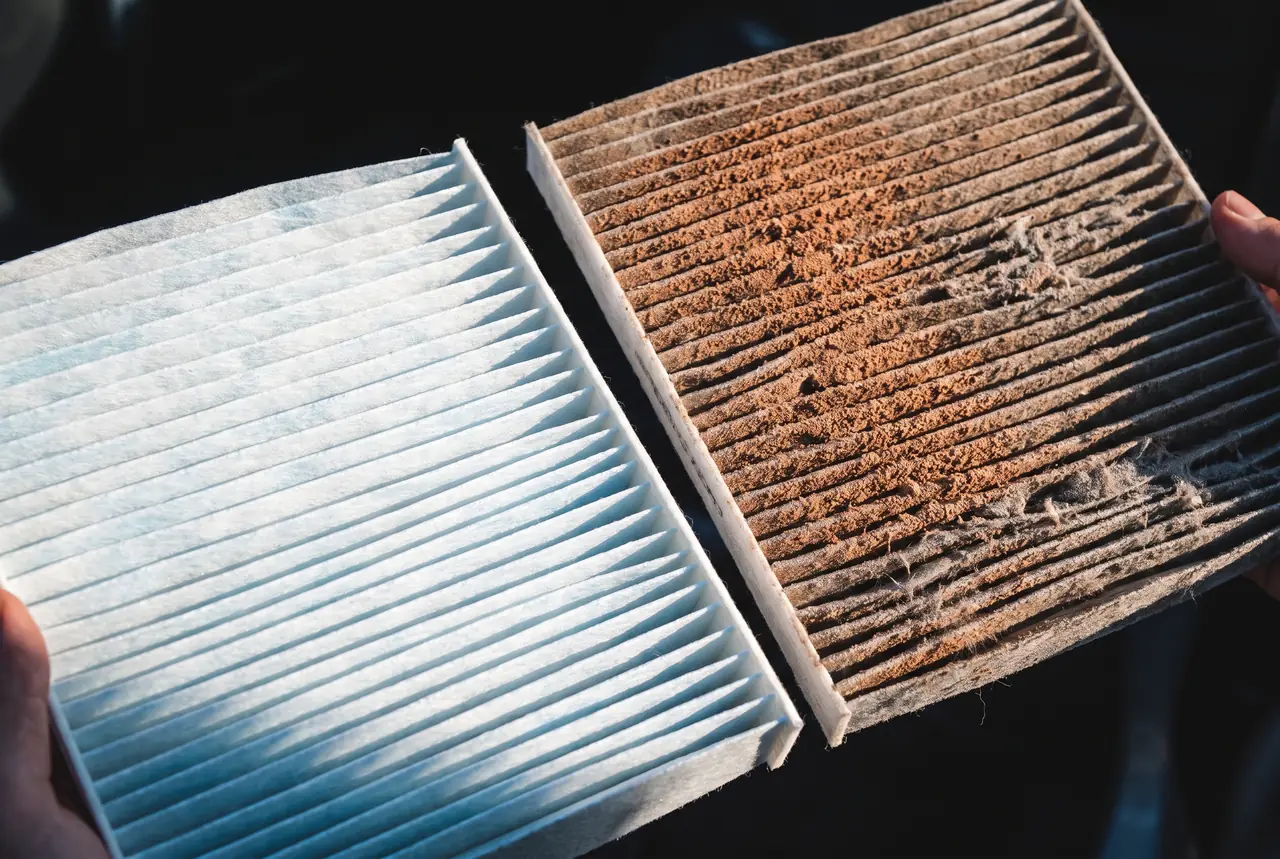
Filtration chosen against your static pressure, not from a catalogue
A better filter in the wrong housing makes the whole system worse. We measure first, then specify, and sometimes the honest answer is that you need a cabinet before you need a filter.
- the practical Phoenix target
- 13 MERV
- media cabinet depth we fit
- 4 in
- of time spent indoors
- 90%
- filter changes during monsoon
- 2x
The MERV ladder, and where to stop climbing it
Higher is not automatically better. Every step up adds resistance, and resistance on a system already fighting Phoenix ductwork costs you cooling.
Pollen, dust mites, textile fibres
The default in most Phoenix homes. Protects the equipment, does little for your lungs.
negligible
Fine dust, pet dander, mould spores
A worthwhile step up that almost any blower can carry in a 1-inch slot.
low
Monsoon silt, bacteria, smoke particles
The Phoenix sweet spot, but only in a 4-inch media cabinet. In a 1-inch slot it strangles the system.
needs a cabinet
Sub-micron particulate, most virus carriers
Real benefit for a household with severe allergies. Requires a blower and duct system designed for it.
high
MERV is the ASHRAE 52.2 minimum efficiency reporting value: how much of a given particle size a filter removes in one pass. The trap is that a MERV 13 filter squeezed into a one-inch return slot can push total static pressure past 1.0 in. w.c., freeze the coil and shorten the blower's life. The filter is not the problem. The housing is.
Monsoon changes the specification
Phoenix has two air quality seasons. Spring is pollen, mostly olive, mulberry and ragweed. Summer is mineral: fine silt driven into every opening in the building by monsoon outflow winds, plus construction dust from whatever is being built nearby.
Silt is harder on equipment than pollen is. It packs into condenser fins and evaporator faces where pollen would blow through, and it is the reason our Phoenix maintenance specification calls for two coil washes a year instead of one.
Change filters monthly, July to September
A filter that lasts three months in February will be loaded in four weeks during a dust season. Set a reminder, or let the plan visit handle it.
Wash the condenser coil
Silt in the outdoor fins is the other half of the problem. It is an outdoor job that shows up as an indoor comfort complaint.
Dehumidify if the house runs clammy
Monsoon humidity gives an oversized system latent work it was never sized for. A whole-home dehumidifier fixes what a colder set point cannot.
Treat the coil and pan
UV-C on the evaporator and drain pan stops biological growth that hard-water scale is already helping along.

The equipment, and the honest case for each
Media cabinet
4 in
The single highest-value upgrade. More surface area means better filtration at lower pressure drop, and a filter that lasts six months.
UV-C coil light
~1 yr
Lamp life. Genuinely useful on a wet evaporator coil and drain pan. Not a whole-house air purifier, whatever the brochure implies.
Dehumidifier
70 pt/day
Worth it if your house feels clammy during monsoon at a set point that used to be comfortable.
Fresh air intake
ASHRAE 62.2
A tight new build needs deliberate ventilation. An older leaky home in Phoenix usually does not.
Duct cleaning
Case by case
Genuinely useful after construction or a rodent problem. As a routine annual service, it is mostly theatre and we will say so.
Ionisers
Not fitted
We do not sell bipolar ionisation. The independent evidence in real homes is thin and some units generate ozone.
Air quality questions
Why does monsoon season wreck air conditioners?
Two reasons. Dust driven into the condenser fins insulates the coil, so head pressure climbs, the compressor works harder and draws more current, and the capacitor sitting next to it cooks. Then the humidity spike loads the evaporator with latent work it does not normally do here, and any marginal system starts freezing up. A coil wash before July is the cheapest insurance in the Phoenix homeowner budget.
My air handler is in the attic. Is that a problem?
It is the Phoenix default and it is not ideal. Attic temperatures reach 150 degrees or more, so every foot of duct up there is fighting that heat, and any leak in the supply side pulls that air into your home. It also means condensate leaks show up on your ceiling. We recommend a secondary drain pan with a float switch on every attic install, and R-8 insulation on the duct rather than the R-6 that meets minimum code.
Does hard water affect my air conditioning?
Indirectly, and more than people expect. Valley water is hard, and scale builds up in condensate drain lines and pans. A blocked drain trips the safety float switch and the system shuts down, which reads to a homeowner as a dead air conditioner. It also accelerates corrosion in the drain pan itself. Clearing and treating the line is a standard part of every maintenance visit for exactly this reason.
Not sure what your system can carry?
We will measure the static pressure and tell you which filter your blower can actually live with.