Heat pumps make more sense in Phoenix than most homeowners expect
A heat pump moves heat instead of making it. In a climate with a long cooling season and a mild, short winter, that arithmetic lands firmly in its favour.
- typical heating efficiency
- 8.5 HSPF2
- effective heating efficiency
- 300%+
- common cooling rating
- 17.2 SEER2
- where output starts to taper
- ~40°F
Heat pump against straight-cool plus a gas furnace
Both are legitimate. Which one wins depends on your gas line, your elevation and how long you intend to stay.
Heat pump
One outdoor unit, one air handler
- Winter running cost, valley floor
- Usually lower. Moving heat costs less than burning fuel to make it, and Phoenix winters rarely push a heat pump into backup.
- Performance on the coldest mornings
- Output tapers below about 40 degrees and electric strip heat picks up the shortfall. In Phoenix that is a handful of mornings.
- What is in the house
- No gas appliance, no combustion, no flue, no carbon monoxide risk from the heating system at all.
- Installed cost
- Typically slightly higher than an equivalent condenser and air handler, and rebates frequently close the gap.
- Maintenance
- One visit covers both seasons, because it is one machine running in two directions.
- Lifespan in this climate
- Runs all year, so it accumulates hours faster. Expect twelve to fifteen years with real maintenance.
Straight cool plus gas
Condenser outside, furnace inside
- Winter running cost, valley floor
- Higher at current Arizona gas and electricity rates for a typical valley-floor winter, though the gap is not dramatic.
- Performance on the coldest mornings
- Full output at any outdoor temperature. This is where gas genuinely wins, and it matters more at elevation.
- What is in the house
- A gas appliance with a heat exchanger that needs annual inspection and eventually fails.
- Installed cost
- Lower up front where a sound gas line, flue and furnace cabinet already exist.
- Maintenance
- Two distinct inspections: a cooling tune-up and a separate combustion and heat exchanger check.
- Lifespan in this climate
- The furnace often outlives the condenser, which means a staged replacement rather than one big bill.
Our read: For most valley-floor homes we recommend the heat pump, particularly when there is no existing gas line or the furnace is already past year fifteen. Above about 2,500 feet, or where a good gas furnace has years left in it, we will tell you to keep the furnace and replace only the condenser.
Defrost is not a fault, and a stuck reversing valve is
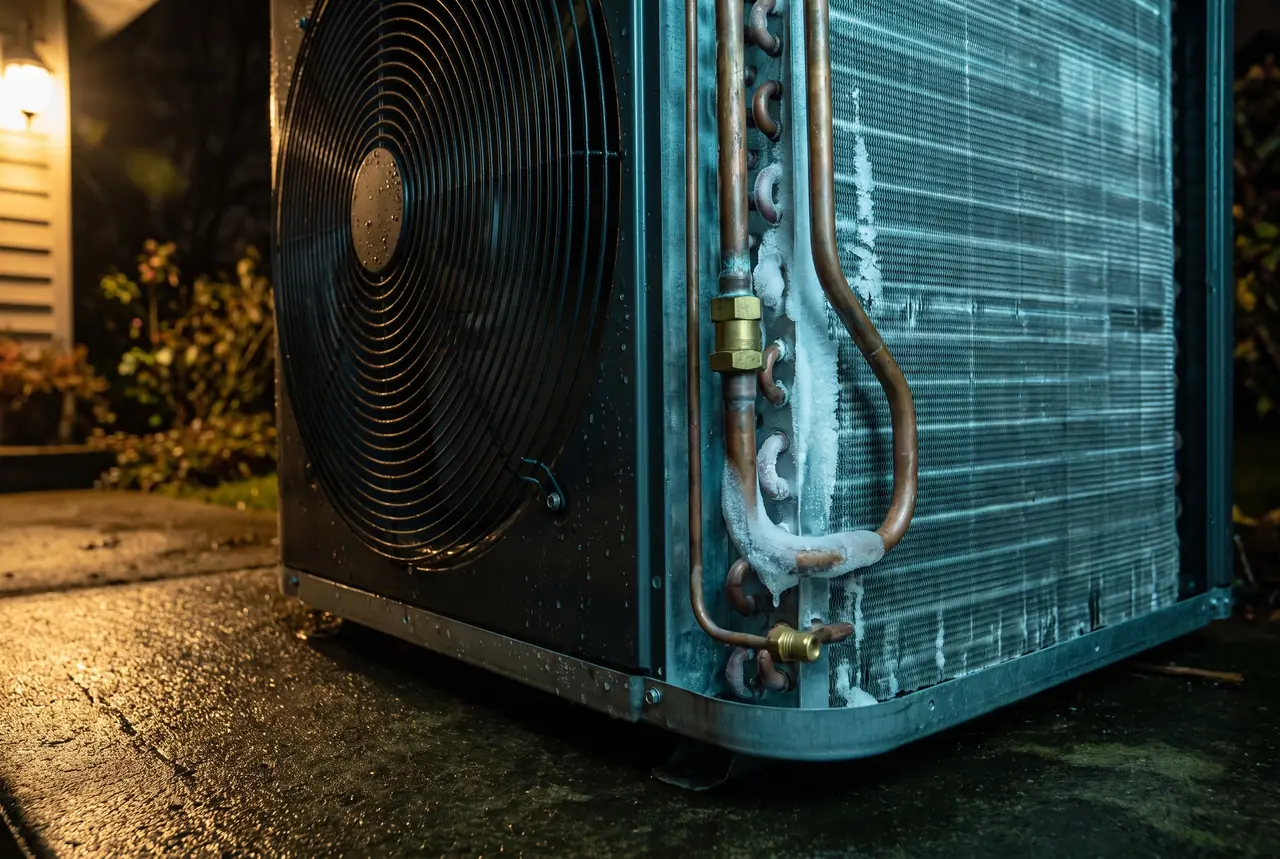
A heat pump running in heating mode will periodically stop, steam, and blow cold for a few minutes. That is the defrost cycle reversing the refrigerant flow to melt frost off the outdoor coil. It is designed behaviour and it is not a fault.
What is a fault is a heat pump that blows cold and never recovers.That is usually the reversing valve or its solenoid, and it is a repair rather than a replacement, whatever a salesperson standing in your hallway may prefer to say.
Reversing valve
The component that lets one machine both heat and cool. When its solenoid sticks you get cooling in December, and it is the single most misdiagnosed heat pump fault.
Defrost board and sensor
A failed defrost cycle leaves the outdoor coil iced over and the system limping on strip heat while your bill climbs.
Auxiliary heat staging
Strip heat that engages when it is not needed is expensive. We check the lockout thresholds rather than assume the installer set them.
Inverter communication
Variable-speed systems fail differently. Usually the thermostat and the inverter board have stopped talking after a power event.
The five numbers that decide what you pay to run it
SEER2
14.3 to 22
Seasonal cooling efficiency at realistic duct static pressure. In Phoenix the payback curve flattens around 17 or 18.
EER2
11 to 14
Efficiency at a fixed 95 degree day. For a climate like ours this matters more than the seasonal average does.
HSPF2
7.5 to 9.5
Seasonal heating efficiency. Above 8.5 a heat pump comfortably beats gas at Arizona rates.
Compressor
Variable
An inverter compressor runs long and slow at part load, which is quieter, steadier and much cheaper than cycling on and off.
Refrigerant
R-454B
The lower global warming potential replacement for R-410A on new equipment. Different pressures, different tooling, same principle.
Sound
55 to 72 dB
Worth caring about on a zero-lot-line property where the condenser sits under a bedroom window.
Heat pump questions
Heat pump or gas furnace?
In the Phoenix valley the heat pump usually wins. We see roughly 1,100 heating degree days a year, so the heating season is short and mild, and a heat pump running at an HSPF2 of 8 or better delivers that heat for less than gas at current Arizona rates. The case for gas gets stronger at elevation, and for homes that already have a sound gas line and a furnace with years left in it.
What is SEER2 and does a higher number pay for itself?
SEER2 replaced SEER in 2023 and is measured against a higher external static pressure, so it reflects real installed ducting rather than a laboratory ideal. A SEER2 number roughly 4.5% lower than the old SEER figure describes the same machine. Whether extra efficiency pays back depends on your runtime. In Phoenix, with 3,000 or more cooling hours a year, the step from 14.3 to 16 SEER2 usually pays for itself. The step from 18 to 22 often does not, and we will say so.
What size system do I need?
That is what a Manual J load calculation answers, and it is the only honest answer. It accounts for your square footage, orientation, glazing, insulation, infiltration and duct losses. Rules of thumb like 500 square feet per ton produce oversized equipment that short-cycles, never dehumidifies and dies early. We run the calculation before quoting, and we will show you the output.
Want the comparison run on your actual house?
We will model both options against your runtime and your utility rate, and give you the two numbers side by side.