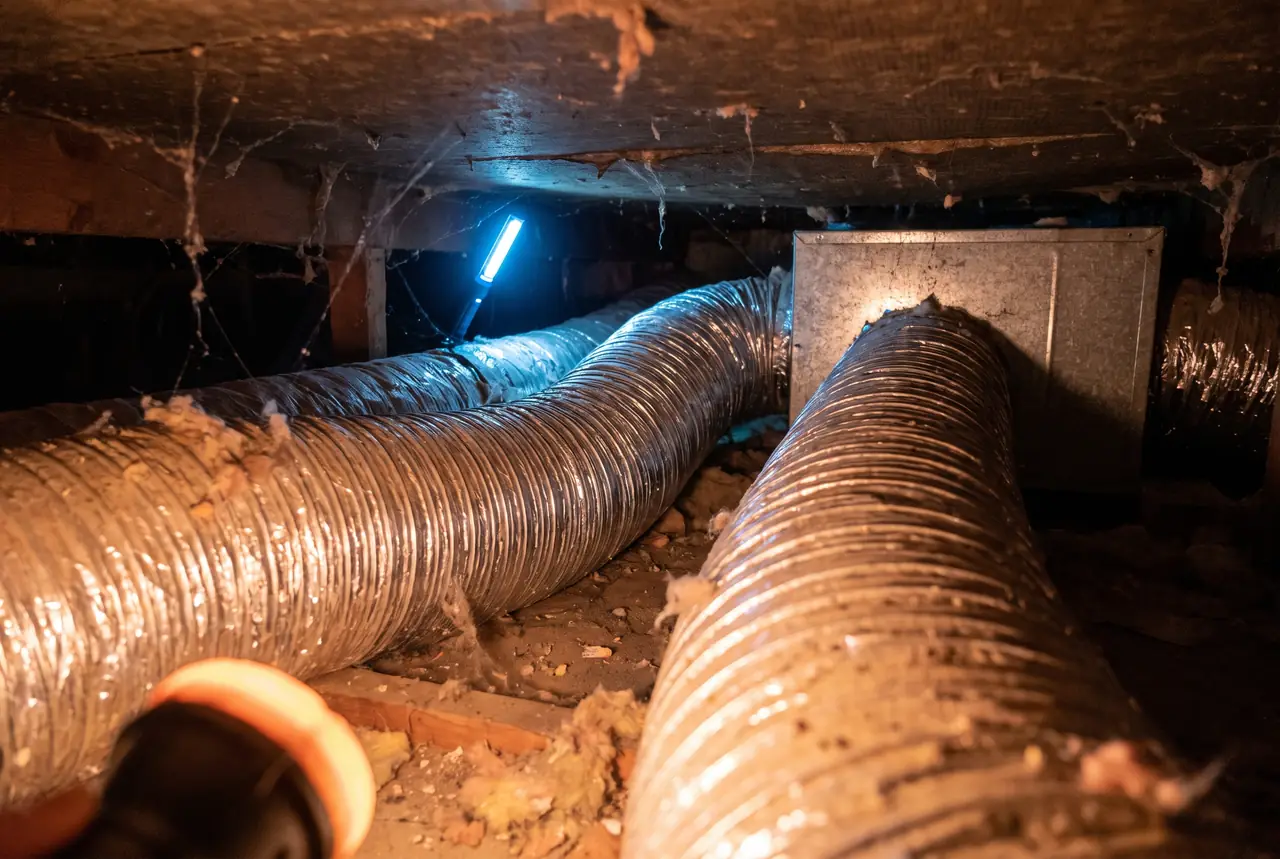
A perfect condenser feeding a leaking attic duct is a wasted purchase
We put a manometer on every system we touch. If the ductwork is strangling it, no amount of new equipment will fix the hot back bedroom.
- total static pressure target
- 0.50 in. w.c.
- typical leakage we find untreated
- 25%
- insulation we specify in attics
- R-8
- a Phoenix attic in August
- 150°F
Total external static pressure
It is blood pressure for a duct system. Almost no residential contractor in this market measures it, and it is the single most useful number in the trade.
0.30 to 0.50
Healthy
The system is breathing. Rated airflow, rated capacity, rated lifespan.
0.51 to 0.80
Strained
Airflow is down, the blower is working harder, and rooms furthest from the plenum start losing.
0.81 and above
Failing
The coil freezes, the blower motor cooks, and a brand new condenser will not fix any of it.
Most residential equipment is rated at 0.50 inches of water column. The average existing Phoenix home we test reads between 0.80 and1.10, which is roughly the equivalent of asking the blower to breathe through a folded towel.
What we actually do about it
A duct leakage test pressurises the system and measures how much air escapes before it reaches a room. In an unconditioned Phoenix attic that air is being paid for twice: you cool it, then you lose it into a 150 degree space, and the pressure imbalance pulls that attic air back into the house through the return side.
We test before and after, and you keep both printouts. If the numbers do not improve, the work is not finished.
Add return air
Undersized returns cause more high static readings than anything else. Often the fix is one additional return and a larger filter grille, not new ducting.
Reseal every joint
Mastic on connections, boots and the plenum. Cloth duct tape has been failing in Phoenix attics since the day it was installed there.
Replace collapsed flex
Flex duct that has slumped off its supports pinches to a fraction of its rated diameter. We resupport, reroute, or replace the run.
Balance the rooms
Manual dampers set with a flow hood so the west bedroom gets what the calculation says it needs, not what happens to reach it.
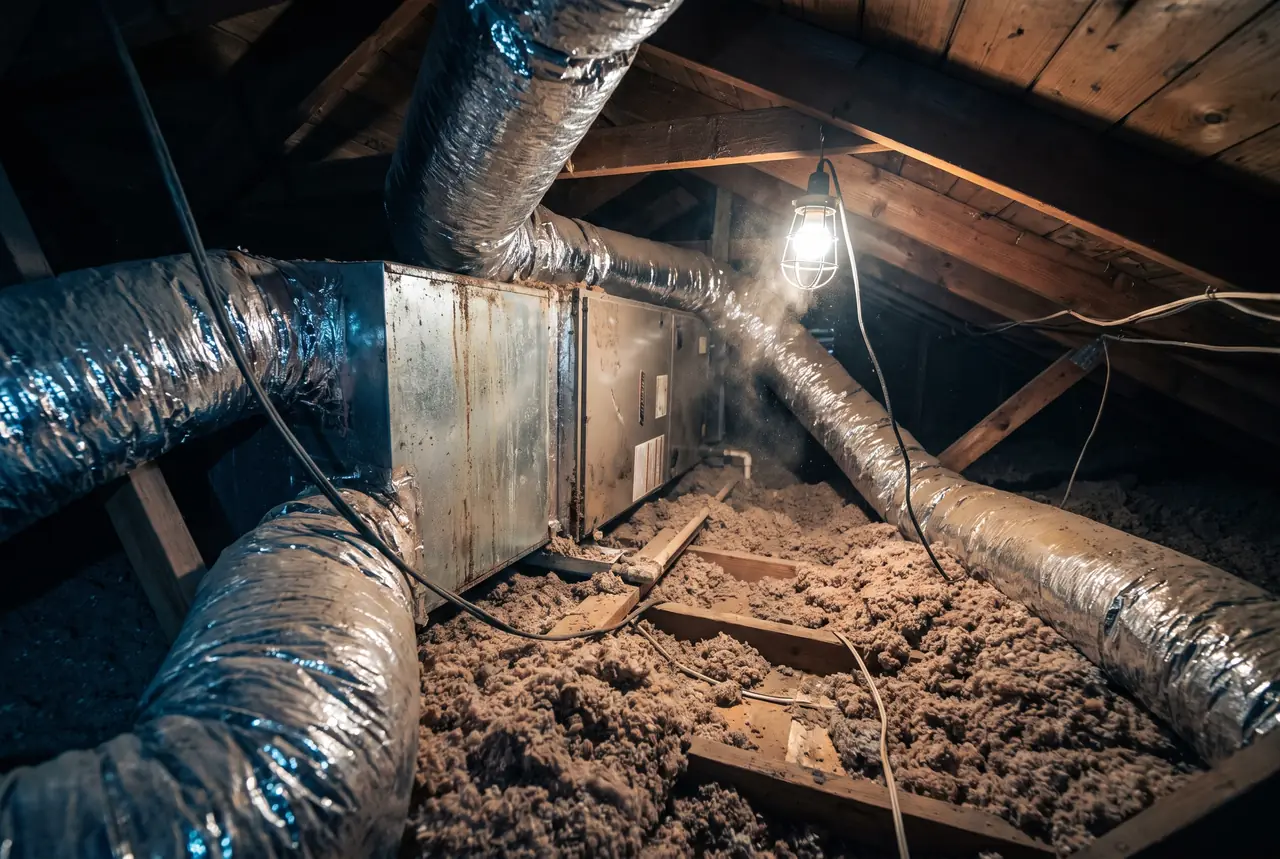
Six readings, taken on every duct assessment
Total static
0.50 in. w.c.
Supply plus return, measured across the air handler. The headline number for the whole system.
Supply static
0.20 in. w.c.
Isolated to the supply side, so we know which half of the system is causing the restriction.
Return static
0.20 in. w.c.
The half that is nearly always the problem in Phoenix homes, because returns are routinely undersized.
Delta T
18 to 22°F
The temperature split across the coil. Outside that band, either airflow or charge is wrong.
Duct leakage
<10%
Our target after sealing. Untreated Phoenix attic systems commonly test at 25% or worse.
Room airflow
±10%
Every register measured with a flow hood against its Manual J requirement, and dampered to match.
Five signs the problem is the ducts and not the equipment
- One room is always hot and the rest of the house is fine.
- The return grille whistles or the filter sucks itself concave.
- The evaporator coil freezes even with a clean filter fitted.
- Registers a long way from the air handler barely move a tissue.
- A new system was installed and the bill did not fall.
Ductwork questions
My air handler is in the attic. Is that a problem?
It is the Phoenix default and it is not ideal. Attic temperatures reach 150 degrees or more, so every foot of duct up there is fighting that heat, and any leak in the supply side pulls that air into your home. It also means condensate leaks show up on your ceiling. We recommend a secondary drain pan with a float switch on every attic install, and R-8 insulation on the duct rather than the R-6 that meets minimum code.
What size system do I need?
That is what a Manual J load calculation answers, and it is the only honest answer. It accounts for your square footage, orientation, glazing, insulation, infiltration and duct losses. Rules of thumb like 500 square feet per ton produce oversized equipment that short-cycles, never dehumidifies and dies early. We run the calculation before quoting, and we will show you the output.
Why does monsoon season wreck air conditioners?
Two reasons. Dust driven into the condenser fins insulates the coil, so head pressure climbs, the compressor works harder and draws more current, and the capacitor sitting next to it cooks. Then the humidity spike loads the evaporator with latent work it does not normally do here, and any marginal system starts freezing up. A coil wash before July is the cheapest insurance in the Phoenix homeowner budget.
Get the number before you buy equipment
A duct assessment costs a fraction of a replacement and occasionally makes one unnecessary.